14- and 16-Inch MacBook Pro
Apple's latest 14- and 16-inch MacBook Pro models debuted in October 2023.
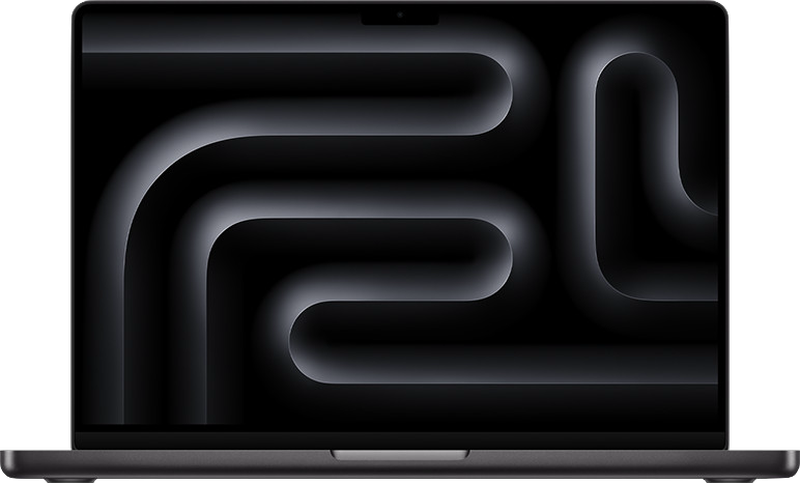
Should You Buy the 14- and 16-Inch MacBook Pro?
The 14- and 16-inch MacBook Pro models offer the M3, M3 Pro, and M3 Max chips for a high level of performance, with mini-LED displays, MagSafe fast charging, a range of ports, and more. Announced in October 2023, the MacBook Pro Models are still new and an update isn't expected until late 2024 or early 2025, so now is still a good time to buy a new MacBook Pro.
The entry-level 14-inch M3 MacBook Pro is priced starting at $1,599, while the M3 Pro chip version is priced starting at $1,999. The 14-inch MacBook is the only model that can be purchased with an M3, M3 Pro, or M3 Max chip. The higher-end 16-inch MacBook Pro is priced starting at $2,499, and it can be bought with the M3 Pro or M3 Max chip.
Apple's M3-series chips are the first built on a 3-nanometer process, introducing faster speeds, improved efficiency for better battery life, and better GPU performance with hardware-accelerated ray tracing.
If you don't need such a high level of performance, a wide range of ports, or features like the mini-LED display, you'll want to look to Apple's more affordable MacBook Air models.
- MacBook Air vs. MacBook Pro Buyer's Guide: 30+ Differences Compared
- Apple Silicon Buyer's Guide: All the Differences Explained
- Late 2023 MacBook Pro Buyer's Guide: 14-Inch and 16-Inch Models Compared
- M2 vs. M3 Buyer's Guide: How Much Better Really Is M3?
If you're considering a MacBook Pro, we have a dedicated Deals guide that lists the best prices and discounts that we've seen this month.
The M3 MacBook Pro Models
Contents
Apple in October 2023 overhauled the 14-inch and 16-inch MacBook Pro models, adding next-generation M3, M3 Pro, and M3 Max chips and a minor display update.
The October 2023 MacBook Pro models have received no design changes and continue to come in 14.2-inch and 16.2-inch size options with mini-LED displays. Changes are internal, focused around the updated M-series chips.
The M3 chip has an 8-core CPU and 10-core GPU, while the M3 Pro chip has up to a 12-core CPU and an 18-core GPU. The high-end M3 Max has up to a 16-core CPU and a 40-core GPU. All of the new chips support hardware-based ray tracing for better gaming performance. Apple's M3 chips are up to 30 percent faster than the prior-generation M2 chips, and all three include a 16-core Neural Engine.
The M3 chip supports up to 24GB Unified Memory, while the M3 Pro supports up to 36GB. The M3 Max supports up to 128GB Unified Memory. The M3 features 100GB/s memory bandwidth, the M3 Pro offers 150GB/s memory bandwidth, and the M3 Max features up to 400GB/s unified memory bandwidth.
The 14- and 16-inch MacBook Pro models feature a Liquid Retina XDR display, which is a mini-LED display with an improved 600 nits SDR brightness, up to 1000 nits sustained XDR brightness, 1600 nits peak brightness, and a 1,000,000:1 contrast ratio. The 14-inch MacBook Pro has a resolution of 3024-by-1964 at 254 pixels per inch, and the 16-inch model has a resolution of 3456-by-2234 at 254 pixels per inch.
There are slim 3.5mm bezels at the sides and the top, and the top of the display also features a notch design that houses a 1080p webcam. Both displays come equipped with ProMotion technology, which supports adaptive refresh rates ranging from 24Hz to 120Hz. Other display technologies include P3 Wide color for true-to-life colors and True Tone, which shifts the white balance of the display to match the lighting in the room.
Design wise, the M3 MacBook Pro models are identical to the prior-generation M2 MacBook Pro models, though there is a new space black color for M3 Pro and M3 Pro Max versions that joins the silver color. There's an all-black keyboard with a full-sized row of function keys, along with a Touch ID button with a circular fingerprint sensor. Touch ID is used unlock the Mac, authenticate purchases, and replace passwords. Below the keyboard, there's a large Force Touch trackpad.
Apple is using the same rearchitected thermal design that provides sustained performance while keeping the machine cool and quiet even with the more powerful M3 Pro and M3 Max chips.
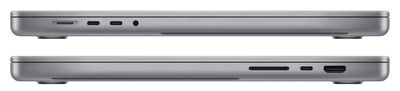
There are multiple ports included with both MacBook Pro models, including an SDXC card slot, an HDMI 2.1 port, two USB-C Thunderbolt 3 ports for the M3 and three USB-C Thunderbolt 4 ports for the M3 Pro/Max models, a 3.5mm headphone jack with support for high-impedance headphones, and a MagSafe 3 port that enables a fast charging feature providing a 50 percent charge within 30 minutes.
The 16-inch MacBook Pro uses a 140W power adapter while the 14-inch models ship with either a 70W or 96W power adapter depending on chip configuration, and all of the MacBook Pro models can charge over either USB-C or MagSafe.
There are fast SSDs inside the MacBook Pro models, which are configurable with up to 8TB storage space in both models, though the MacBook Pro with standard M3 chip is limited to 2TB and the M3 Pro models are limited to 4TB.
Thanks to the new M3 chips, the MacBook Pro models feature even longer battery life. The 14-inch MacBook Pro with M3 chip lasts for up to 22 hours when watching movies and 15 hours when browsing the web. The 14-inch MacBook Pro with M3 Pro and M3 Max lasts for up to 18 hours when watching movies and up to 12 hours when browsing the web.
The 16-inch MacBook Pro lasts for up to 22 hours when watching movies and 15 hours when browsing the web with both the M3 Pro and M3 Max chips.
Other features include Wi-Fi 6E and Bluetooth 5.3 support, with Wi-Fi 6E offering faster wireless connectivity and lower latency through the 6GHz band. The MacBook Pro models also include a six-speaker sound system with two tweeters, four force-cancelling woofers, and wide stereo sound.
The 14-inch MacBook Pro is priced starting at $1,599, while the 16-inch MacBook Pro is priced starting at $2,499. Entry-level pricing is lower than before because Apple has replaced the previous M2 13-inch MacBook Pro with the M3 14-inch model. The M3 Pro 14-inch MacBook Pro continues to start at $1,999, the same as the previous-generation M2 Pro model.
Note: See an error in this roundup or want to offer feedback? Send us an email here.
How to Buy
The 14- and 16-inch MacBook Pro models can be ordered from Apple's online store as of now, with shipping to start on November 7 for the M3 and M3 Pro models. M3 Max models will ship later in November.
Both stock configurations and build-to-order upgrades are available. The 14-inch MacBook Pro is priced starting at $1,599, while the 16-inch MacBook Pro is priced starting at $2,499. As of February 2024, Apple sells refurbished versions of the M3, M3 Pro, and M3 Max MacBook Pro models at a discounted price.
The M3 MacBook Pro Models
Reviewers were impressed with the M3 MacBook Pro models for the most part, but there is a caveat with the middle-tier MacBook Pro chip. On the whole, the M3 chips offer notable CPU and GPU improvements over the M2 chips, but the M3 Pro's multi-core GPU performance is just 6.7 percent higher, while the GPU performance is only up 1.6 percent.
The M3 is up to 20 percent faster than the M2, while the M3 Max is up to 50 percent faster than the M2 Max, so in comparison, the M3 Pro is a disappointment. It is still a minor improvement over the M2 Pro, but it has 25 percent less memory bandwidth and one fewer GPU core.
GPU performance is way up for the M3 and M3 Max, with support for hardware-accelerated ray tracing, which means gaming is much faster and a more pleasant experience.
The updated space black color offers a matte finish and as Apple says, fingerprint resistance. The reviewers felt that the sealing process that Apple used really works. "Marks may not vanish completely, but they are very hard to spot," said The Independent's Davis Phelan.
For more MacBook Pro reviews, we have a full review roundup available.
Design
Apple in 2021 overhauled the MacBook Pro inside and out, refining the well-known aluminum unibody design with a flatter shape and a reduced curve at the bottom. With the October 2023 refresh, Apple has not introduced any design changes, and the MacBook Pro models appear identical to the 2021 models.
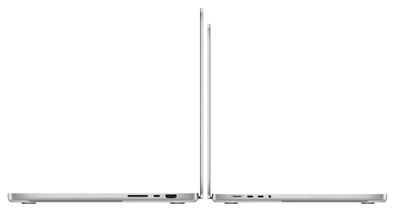
Apple offers the MacBook Pro in silver, space gray, and space black aluminum color options, depending on chip configuration, and it can be purchased in 14- and 16-inch sizes. There are slim bezels at the top and the sides, a notch at the top for the camera, a keyboard that's all black, a large trackpad, and additional ports at the left and right sides. There continues to be a large Force Touch trackpad, and there are two speaker grilles at the sides of the keyboard.
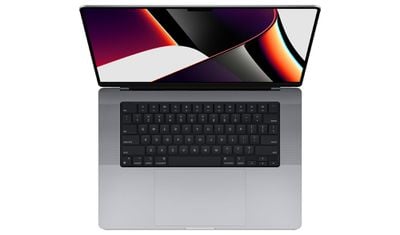
According to Apple, the space black MacBook Pro has an "anodization seal" that is designed to cut down on fingerprints. Initial hands-on tests of the machine suggest that the color is indeed more resistant to fingerprints.
The 14-inch model measures in at 12.31 inches (31.26 cm) long, 8.71 inches (22.12 cm) wide, and 0.61 inches (1.55 cm) thick, and it weighs in at 3.4 pounds (1.55 kg) with the M3 chip, 3.5 pounds (1.61 kg) with the M3 Pro chip, and 3.6 pounds (1.62 kg) with the M3 Pro Max chip.
The 16-inch model measures in at 14.01 inches (35.57 cm) long, 9.77 inches (24.81 cm) wide, and 0.66 inches (1.68 cm) thick. It weighs in at 4.7 pounds (2.14 kg) with the M3 Pro chip and 4.8 pounds (2.16 kg) with the M3 Max chip.
Internally, the design of the MacBook Pro maximizes internal space and is machined around an advanced thermal system that optimizes air movement to cut down on how often the fans activate. The MacBook Pro machines are designed to provide high performance while remaining cool and quiet, and for most everyday tasks, the fans do not turn on.
Repair site iFixit tore down the new MacBook Pro models, confirming that there have been no internal changes with the exception of updated chips.
Display
Both MacBook Pro models are equipped with a "Liquid Retina XDR (Extreme Dynamic Range) display," which uses mini-LED technology. The 16-inch MacBook Pro features a 16.2-inch display with a 3456-by-2234 native resolution at 254 pixels per inch.
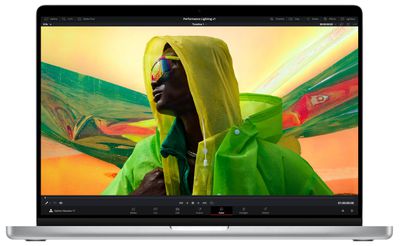
The 14-inch MacBook Pro includes a 14.2-inch display with a 3024-by-1964 native resolution at 254 pixels per inch. Aside from differences in size and the resulting difference in resolution, the displays of the 14- and 16-inch models are identical.
Both are using mini-LED technology with 1000 nits sustained XDR brightness and 1600 nits peak brightness, with a contrast ratio of 1,000,000:1. The displays offer support for a billion colors, along with P3 Wide color for bright, true-to-life colors.
According to Apple, users can expect HDR content to come to life with more detail in shadows, brilliant highlights, deeper blacks, and more vivid colors than were previously available. This is enabled through the 10,000 mini-LEDs that are grouped into individually controlled local dimming zones.
When displaying SDR content, the display can deliver a peak brightness of 600 nits, 100 nits brighter than the prior-generation model. The display's 1600 nits peak brightness capability is reserved for HDR content only.
True Tone, a feature that is designed to match the white balance of the display to the ambient lighting in the room, is supported. Apple devices have used True Tone for years, and it is designed to make viewing a Mac's screen easier on the eyes because it takes into account outside lighting and color temperature.
The MacBook Pro models support ProMotion technology for adaptive refresh rates ranging from 24Hz to 120Hz. When viewing a static webpage that doesn't require a high refresh rate, the MacBook Pro's display adopts a lower refresh rate to preserve battery life, but when gaming, scrolling, or doing other activities where a higher refresh rate is needed for smoother content, the higher frame rates kick in.
Keyboard and Trackpad
The late 2023 MacBook Pro features the same all-black keyboard base that was used in the 2021 and early 2023 MacBook Pro models. There is a full-sized row of function keys along with a large Escape key on the left side. The right side features a power button with a circular Touch ID fingerprint reader.
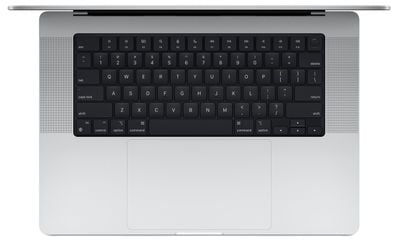
Apple includes arrow keys in the traditional inverted T-arrangement, and this is a scissor switch keyboard that is more durable than the butterfly keyboard that Apple used in some prior MacBook Pro models. It holds up better to crumbs, dust, and debris, which could cause failure with the older MacBook Pro keyboards.
All of the keys are backlit and adjust based on the lighting in the room thanks to an ambient light sensor.
Below the keyboard, there's a large Force Touch trackpad that is unchanged from prior models. The Force Touch trackpad has no traditional buttons and is powered by a set of Force Sensors, allowing users to press anywhere on the trackpad to get the same response. A Taptic Engine powered by magnets provides users with tactile feedback when using the trackpad, replacing the feel of a physical button press.
The Force Touch trackpad supports a light press, which is used as a regular click, along with a deeper press or "force click" as a separate gesture that does things like offer up definitions for a highlighted word.
Ports
The late 2023 MacBook Pro models feature a selection of different port options for connecting displays and peripherals, and charging.
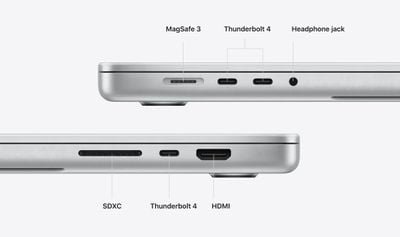
All 14- and 16-inch MacBook Pro models include a UHS-II SDXC card slot, an HDMI 2.1 port that supports a 4K display at up to 240Hz or an 8K display at up to 60Hz, and a 3.5mm headphone jack.
The 14-inch MacBook Pro with M3 chip includes two Thunderbolt 3 (USB-C) ports, while all other models include three Thunderbolt 4 ports. The Thunderbolt 3 and Thunderbolt 4 ports support speeds of up to 40Gb/s in addition to serving as a DisplayPort and allowing for charging.
There is also a dedicated MagSafe port and an accompanying braided MagSafe cable for charging. MagSafe offers a breakaway design that allows the cable to easily disconnect if it's pulled, preventing damage to the port or machine.
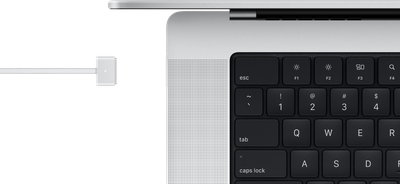
The MagSafe port also offers faster charging on the 16-inch machine than you can get over USB-C, but both machines can charge over MagSafe or the included Thunderbolt ports.
M3, M3 Pro, and M3 Max Chips
For the first time, the 14-inch and 16-inch MacBook Pro models can be configured with three chips, the M3, the M3 Pro, and the M3 Max. The 14-inch model can be purchased with any of the three chips, while the 16-inch machine is available with the M3 Pro or the M3 Max.
The M3 chip has an 8-core CPU and a 10-core GPU, while the M3 Pro has up to a 12-core CPU and up to an 18-core GPU. The M3 Max has up to a 16-core CPU and up to a 40-core GPU.
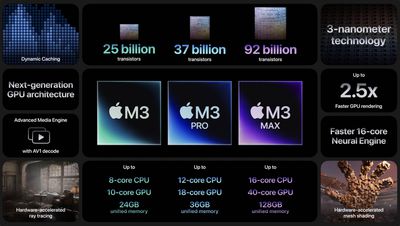
The M3 chips are built on Apple's next-generation 3-nanometer architecture. Apple says that the M3 chips represent the "biggest leap forward in graphics architecture ever for Apple silicon" with faster and more efficient GPU technology. The M3 GPUs support Dynamic Caching, hardware-accelerated ray tracing, and mesh shading.
Dynamic Caching allocates the use of local memory in hardware in real time, so only the exact amount of memory needed is used for each task. It increases the average utilization of the GPU, thereby increasing performance for demanding pro apps and games.
With hardware-accelerated ray tracing, light looks more realistic as it interacts with a scene, allowing for more physically accurate images. Game developers can use the ray-tracing and mesh shading for more accurate shadows and reflections as well as more efficient geometry processing.
According to Apple, the M3 chips are able to deliver 2.5x better GPU speeds than the M1 chips while using half the power.
As for the CPU, Apple says that it has improved the architecture of the performance and efficiency cores. The M3 performance cores are up to 30 percent faster than the M1 performance cores and up to 15 percent faster than the M2 performance cores. The M3 efficiency cores are up to 50 percent faster than the M1 efficiency cores, and up to 30 percent faster than the M2 efficiency cores.
Benchmarks of the M3 chip in a MacBook Pro confirms that it is 20 percent faster than the M2 chip, as Apple says. The M3 chip earned a single-core score of around 3,000 and a multi-core score of around 11,700. The M2 chip has a single-core score of 2,600 and a multi-core score of 9,700.
Benchmarks of the M3 Max chip suggest that it is about as fast as the M2 Ultra that's in the Mac Studio and the Mac Pro. The M3 Max chip in the MacBook Pro has earned a multi-core score of 21,084, which is quite close to the average 21,182 multi-core score of the M2 Ultra chip in the Mac Pro.
The M3 Max appears to be a good deal faster than the prior-generation M2 Max, which earned a multi-core score of 14,495.
The M3 Pro is not much faster than the M2 Pro in benchmark tests. On Geekbench 6, the M3 Pro earned a single-core score of 3085 and a multi-core score of 15155. Comparatively, the 16-inch MacBook Pro with M2 Pro chip that has a 12-core CPU and 19-core GPU earned a single core score of 2643 and a multi-core score of 14206.
Single-core speed is up 16.7 percent, while multi-core speed is up 6.7 percent. Note that this is one benchmark result so there could be some variance, but it is in line with what we expected. GPU performance is nearly flat. The M3 Pro MacBook Pro earned an OpenCL score of 51093, while the equivalent M2 Pro version had a score of 50302 for a difference of 1.6 percent.
Media Engine
Apple includes a media engine in its Apple silicon chips to speed up video processing while preserving battery life. The M3 offers dedicated acceleration for the ProRes video codec, along with video encode/decode engines and hardware accelerated support for H.264, HEVC, ProRes, and ProRes Raw.
The M3 Max has the same capabilities, but it includes two video encode engines and two ProRes encode and decode engines for even faster performance for pro tasks.
Memory
The M3, M3 Pro, and M3 Max use a system-on-a-chip architecture with unified memory and unmatched power efficiency. The M3 supports up to 24GB unified memory, the M3 Pro supports up to 36GB unified memory, and the M3 Max supports up to 128GB unified memory.
Apple's M3 chip provides up to 100GB/s memory bandwidth, while the M3 Pro provides up to 150GB/s. Note that the M3 Pro's memory bandwidth has decreased compared to the M2 Pro chip that supported 200GB/s memory bandwidth. The M3 Max chip delivers 300GB/s in the version with 14 CPU cores and 400GB/s in the version with 16 CPU cores.
Custom Technologies
There's a 16-core Neural Engine built into the M3 chips that handles machine learning acceleration and boosts camera performance alongside the custom image signal processor, plus there's a display engine that can drive multiple external displays.
The M3 supports one external display at 6K resolution at up to 60Hz, or two displays at 5K resolution at 60Hz when the MacBook Pro is in clamshell mode. The M3 Pro supports up to two external displays at up to 6K resolution at 60Hz over Thunderbolt, one display at 8K resolution at 60Hz, or one 4K display at 240Hz.
The M3 Max supports up to three external displays with up to 6K resolution and one external display with up to 4K resolution at 144Hz. Alternatively, it supports up to two 6K 60Hz displays and one 8K display at 60Hz, or one 4K display at 240Hz.
There are additional integrated Thunderbolt controllers for more I/O bandwidth, and a built-in Secure Enclave provides features like hardware-verified secure-boot and runtime anti-exploitation features.
High Power Mode
All MacBook Pro models with the M3 Max chip have a "High Power" mode that's designed for intensive, sustained workloads. In this mode, performance is optimized for system-intensive tasks, which can result in louder fan noise.
High Power Mode can be enabled in System Settings under Battery > Power Adapter > Energy Mode when connected to a power source or under Battery > Battery > Energy Mode when running on battery.
Fine print in System Preferences indicates that High Power Mode may result in louder fan noise, suggesting that the feature allows the M3 Max chip to run hotter and ramps up fan speeds to accommodate this.
Apple says that High Power Mode is designed to maximize performance during intensive, sustained workloads, providing users with "extreme performance" for tasks like color grading 8K ProRes video.
Other Features
Speakers
There's a high-fidelity six-speaker sound system in the MacBook Pro that includes two tweeters and four force-cancelling woofers for 80 percent more bass. Apple says it is the best audio system in a notebook.
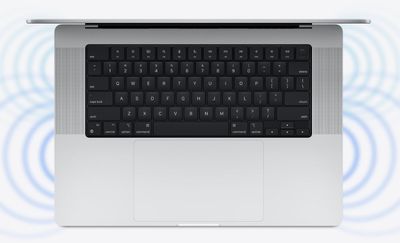
The speaker system supports wide stereo sound, and the MacBook Pro offers support for spatial audio when playing music or video with Dolby Atmos on the built-in speakers. When connected to the AirPods 3, AirPods Pro, or AirPods Max, dynamic head tracking is supported.
There's also a three-microphone array that supports a high signal-to-noise ratio with a 60 percent lower noise floor that can capture even subtle sounds. Directional beamforming allows for crisp, clear voice sound.
SSDs
The MacBook Pro models feature SSDs with up to 8TB of storage space available. The SSDs support speeds up to 7.4GB/s.
Camera
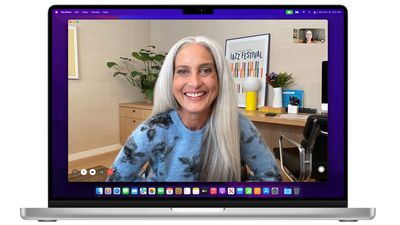
There is a 1080p camera in the MacBook Pro, which is bolstered by the image signal processor built into the M3 chips. The image signal processor makes sure images are sharp, and allows for natural-looking skin tones, and there's also the option to use an iPhone as a webcam.
Wireless Connectivity
The MacBook Pro supports 802.11ax Wi-Fi 6E connectivity and Bluetooth 5.3, the latest Wi-Fi and Bluetooth protocols. Wi-Fi 6E supports the 6GHz band offered by compatible routers for more bandwidth and less latency. Wi-Fi 6E is only useful when paired with a Wi-Fi 6E router, but it is a technology that is becoming more widespread.
Bluetooth 5.3 offers less interference, lower power consumption, improved encryption, a better experience for those who use Bluetooth for connecting things like hearing aids, and improved throughput.
Battery Life
The 14-inch MacBook Pro with M3 chip now lasts for up to 22 hours when watching movies with the Apple TV app, or up to 15 hours when browsing the web. This model has a 70-watt-hour lithium-polymer battery.
The 14-inch MacBook Pro models with M3 Pro and M3 Max chips last for up to 18 hours when watching moves with the Apple TV app or up to 12 hours when browsing the web. The M3 Pro and M3 Max 14-inch models come with a slightly larger 72.4-watt-hour lithium-polymer battery.
Apple's 16-inch MacBook Pro models with M3 Pro and M3 Max chips are able to last for up to 22 hours when using the Apple TV app to watch movies, or 15 hours when browsing the web. The M3 Pro and M3 Max 16-inch models are equipped with a 100-watt-hour lithium-polymer battery.
16-inch MacBook Pro models with the M3 chip family are able to fast charge with MagSafe or USB-C when using a 240W USB-C cable and the 140W power adapter that comes with the device. Prior models were not able to fast charge over USB-C.
The 14-inch MacBook Pro models can fast charge with a 96W USB-C power adapter (the M3 Pro and Max models ship with one while the M3 model ships with a 70W adapter).
Available Models
Build to Order Options
In most of the MacBook Pro models, the M3 chips can be upgraded, and there are also upgrades for the SSD and the memory. Options per model and pricing are available below.
Base Model M3 14-Inch MacBook Pro Upgrade Options
- 16GB Memory - +$200
- 24GB Memory - +$400
- 1TB SSD - +$200
- 2TB SSD - +$600
- 96W Power Adapter - +$20
Upgraded M3 14-Inch MacBook Pro Upgrade Options
- 16GB Memory - +$200
- 24GB Memory - +$400
- 2TB SSD - +$400
- 96W Power Adapter - +$20
Middle Tier M3 Pro 14-Inch MacBook Pro Upgrade Options
- M3 Pro with 12-core CPU and 18-core GPU - +$200
- M3 Max with 14-core CPU and 30-core GPU - +$600
- M3 Max with 16-core CPU and 40-core GPU - +$900
- 36GB Memory - +$400
- 48GB Memory - +$600 (requires 16-core M3 Max)
- 64GB Memory - +$800 (requires 16-core M3 Max)
- 96GB Memory - +$1,200 (requires 14-core M3 Max)
- 128GB Memory - +$1,600 (requires 16-core M3 Max)
- 1TB SSD - +$400
- 2TB SSD - +$600
- 4TB SSD - +$1,200
- 8TB SSD - +$2,400 (requires M3 Max)
Higher Middle Tier M3 Pro 14-Inch MacBook Pro Upgrade Options
- M3 Max with 14-core CPU and 30-core GPU - +$400
- M3 Max with 16-core CPU and 40-core GPU - +$700
- 36GB Memory - +$400
- 48GB Memory - +$600 (requires 16-core M3 Max)
- 64GB Memory - +$800 (requires 16-core M3 Max)
- 96GB Memory - +$1,200 (requires 14-core M3 Max)
- 128GB Memory - +$1,600 (requires 16-core M3 Max)
- 2TB SSD - +$400
- 4TB SSD - +$1,000
- 8TB SSD - +$2,200 (requires M3 Max)
High-End M3 Max 14-Inch MacBook Pro Upgrade Options
- M3 Max with 16-core CPU and 40-core GPU - +$300
- 48GB Memory - +$200 (requires 16-core M3 Max)
- 64GB Memory - +$400 (requires 16-core M3 Max)
- 96GB Memory - +$800 (requires 14-core M3 Max)
- 128GB Memory - +$1,200 (requires 16-core M3 Max)
- 2TB SSD - +$400
- 4TB SSD - +$1,000
- 8TB SSD - +$2,200
Base Model M3 Pro 16-Inch MacBook Pro Upgrade Options
- M3 Max with 14-core CPU and 30-core GPU - +$400
- M3 Max with 16-core CPU and 40-core GPU - +$700
- 36GB Memory - +$400
- 48GB Memory - +$600 (requires 16-core M3 Max)
- 64GB Memory - +$800 (requires 16-core M3 Max)
- 96GB Memory - +$1,200 (requires 14-core M3 Max)
- 128GB Memory - +$1,600 (requires 16-core M3 Max)
- 1TB SSD - +$200
- 2TB SSD - +$600
- 4TB SSD - +$1,200
- 8TB SSD - +$2,400 (requires M3 Max)
Middle-Tier M3 Pro 16-Inch MacBook Pro Upgrade Options
- M3 Max with 14-core CPU and 30-core GPU - +$400
- M3 Max with 16-core CPU and 40-core GPU - +$700
- 48GB Memory - +$200 (requires 16-core M3 Max)
- 64GB Memory - +$400 (requires 16-core M3 Max)
- 96GB Memory - +$800 (requires 14-core M3 Max)
- 128GB Memory - +$1,200 (requires 16-core M3 Max)
- 1TB SSD - +$200
- 2TB SSD - +$600
- 4TB SSD - +$1,200
- 8TB SSD - +$2,400 (requires M3 Max)
High-End M3 Max 16-Inch MacBook Pro Upgrade Options
- M3 Max with 16-core CPU and 40-core GPU - +$300
- 48GB Memory - +$200 (requires 16-core M3 Max)
- 64GB Memory - +$400 (requires 16-core M3 Max)
- 96GB Memory - +$800 (requires 14-core M3 Max)
- 128GB Memory - +$1,200 (requires 16-core M3 Max)
- 2TB SSD - +$400
- 4TB SSD - +$1,000
- 8TB SSD - +$2,200
Highest-End M3 Max 16-Inch MacBook Pro Upgrade Options
- 64GB Memory - +$200
- 128GB Memory - +$1,000
- 2TB SSD - +$400
- 4TB SSD - +$1,000
- 8TB SSD - +$2,200
What's Next for the MacBook Pro
Apple plans to update the 14-inch MacBook Pro with an M4 chip as soon as late 2024, and we could perhaps see a refresh before the end of the year. The M4 chip will have improved performance to support AI tasks, and it is expected to be built on TSMC's 3-nanometer process. Apple plans to include an upgraded Neural Engine with more cores.
The high-end 14-inch and 16-inch MacBook Pro models could also be updated in either late 2024 or early 2025 and they are expected to use M4 Pro and M4 Max chips.
Further in the Future
Apple is said to be working on an all-display foldable notebook in the MacBook family, which could measure in at around 20 inches. According to display analyst Ross Young, this device would be a new product category for Apple, providing a notebook with a full-size on-screen keyboard when folded, and functionality as a standard monitor when unfolded and paired wth an external keyboard. Such a device is not coming in the near future and is likely to launch later than 2025, perhaps in 2026 or 2027.
Apple is also exploring touchscreen Mac options, and a MacBook Pro with an OLED display and touchscreen could come out as soon as 2025. Apple engineers are said to be "actively engaged in the project," and Apple is seriously considering a touchscreen Mac option. Such a device would continue to offer a traditional laptop design with trackpad and keyboard, but the screen would be touch capable, similar to an iPad.
The 14- and 16-inch MacBook Pro models are not expected to be upgraded with OLED display technology until at least 2026, according to display analyst Ross Young.
Apple is rumored to be working on Face ID for the Mac, and it's likely that the MacBook Pro will be one of the first Macs to get Face ID. We don't know when this is coming, but 2021 rumors said it could be added to the Mac line in a "couple of years."